How to Buy a Farm (Campo or Estancia) in Chilean Patagonia as a Foreigner
TL;DR If you hold a US or European passport, no Chilean law stops you from buying a private campo or estancia in Aysen: the famous border-zone prohibition applies only to nationals of Argentina, Bolivia, and Peru. You need a RUT (obtainable without a visa, through a Chile-based representative), a lawyer who reads the Conservador de Bienes Raices records like scripture, and a healthy respect for DL 3516, the law that decides whether your farm can ever be subdivided. When you eventually sell, a lifetime 8,000 UF capital gains exemption can shelter most or all of your gain. Large remote campos currently list around 1.1 to 1.35 million CLP per hectare, while small riverfront parcels can ask over 80 million CLP per hectare.
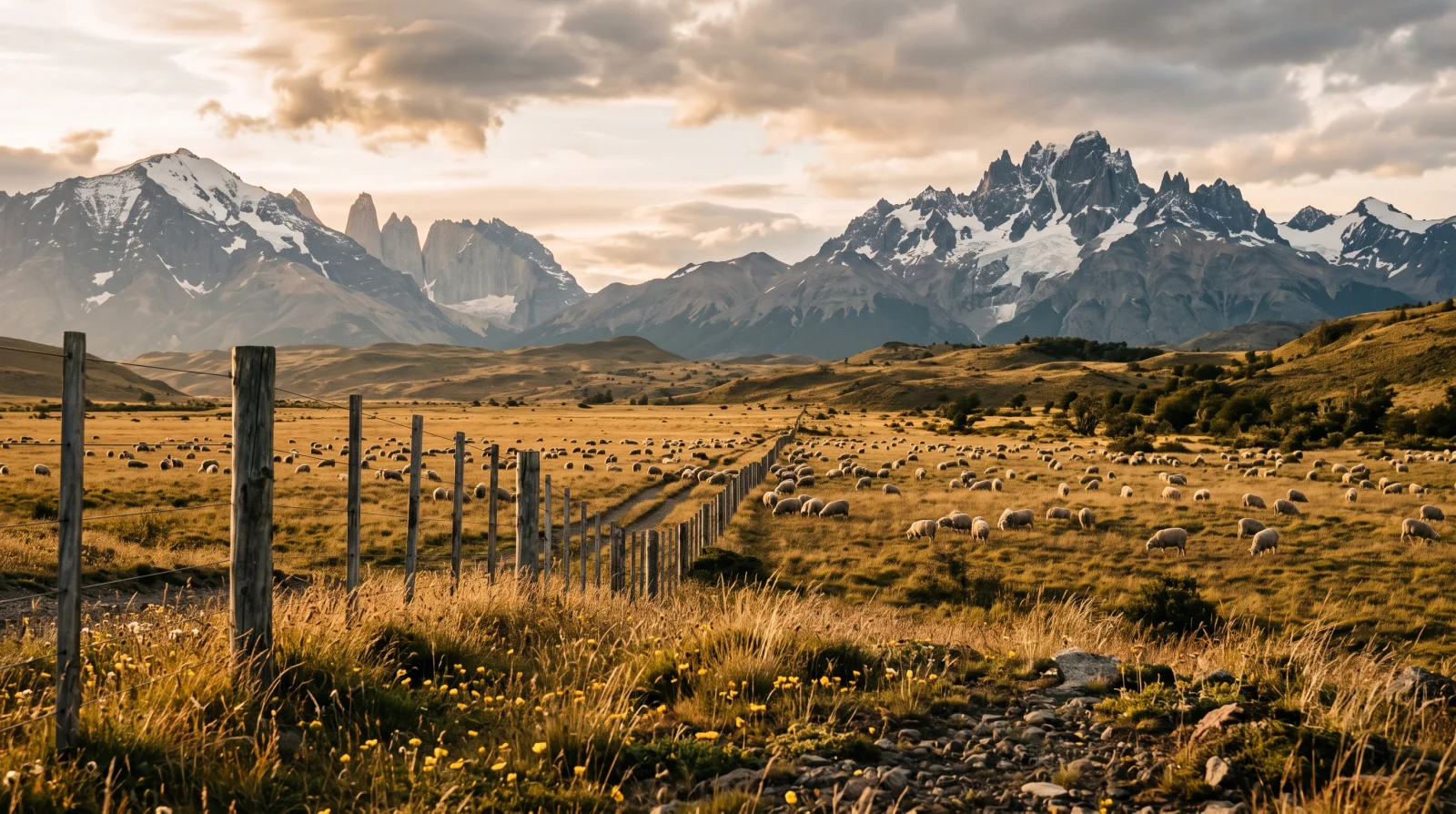 A working estancia in the Aysen highlands. Browse farms for sale across the Aysen Region.
Buying a farm in Chilean Patagonia sounds like the kind of thing that requires a fixer, a briefcase of cash, and a cousin in the foreign ministry. It does not. It requires a tax ID, a good lawyer, and the patience to read some very unglamorous certificates. This guide walks you through the whole thing: who can actually buy, what the law really says about border zones, how due diligence works for rural land, the subdivision rules that trip up half the newcomers, and what campos actually cost in 2026.
One disclaimer before we start: this is a general guide, not legal advice for your specific purchase. Rural land in Aysen rewards buyers who hire professionals and punishes buyers who wing it.
Why Aysen farms attract international buyers
The Aysen Region is one of the last places on Earth where you can buy thousands of hectares of glacier-fed valley, old-growth lenga forest, and trout river for the price of a suburban house in California or a two-bedroom flat in London. That is not marketing copy, it is arithmetic, and we will get to the actual numbers below.
International buyers come for different reasons. Some want a working sheep or cattle operation. Some want conservation land, following the model that created some of Patagonia’s most famous parks. Some want a fly fishing property on a world-class river. And some simply want space, the kind measured in river valleys rather than square meters.
What they all discover is the same thing: Chile has a stable, transparent, registry-based property system. Title is public, searchable, and centuries old in its design. For a foreigner, that predictability is worth as much as the scenery.
Can foreigners actually buy a campo? Yes, and here is the actual law
Let’s kill the biggest myth first, because it scares off more buyers than any other: “foreigners can’t buy near the border in Chile.”
The real rule lives in Decreto Ley 1.939 of 1977, and it is far narrower than the rumor. Article 7 prohibits acquiring ownership, other real rights, possession, or tenure of real estate located in declared border zones (zona fronteriza), but only for a specific class of buyer: nationals of bordering countries, meaning Argentina, Bolivia, and Peru. The prohibition also catches legal entities headquartered in a bordering country, entities with 40 percent or more of their capital owned by nationals of a bordering country, or entities under their effective control. DIFROL, the government agency that administers the regime, confirms it plainly: foreigners from non-bordering countries may acquire border-zone property without any special authorization.
Key Insight: The border-zone prohibition names nationals of Argentina, Bolivia, and Peru. If you are American, German, Dutch, or Australian, you are simply not in the prohibited class, even for land in a declared border zone.
Three refinements matter, and they are where sloppy blog posts (not this one) get it wrong.
First, private land versus fiscal land. A separate rule, Article 6 of the same DL 1939, says that fiscal land (land owned by the Chilean state) within 10 kilometers of the international border can only be obtained, in ownership, lease, or any other title, by Chilean natural or legal persons. The same logic applies to fiscal land within 5 kilometers of the coast, where foreigners domiciled in Chile may qualify with a favorable report from the naval authority. This is the famous “10 km strip”, and note what it governs: acquisitions from the state. It does not restrict your purchase of a privately owned campo from its private owner.
Second, border zones are declared by decree, not drawn by region. Under DFL 4 of 1967, the President fixes border zones by supreme decree on DIFROL’s proposal, and the zones do not follow political boundaries: some communes are only partially inside. So the question is never “is Aysen a border zone” but “is this specific property in a declared border zone.” Your lawyer checks the property, not the map of regions. We wrote a whole explainer on how border zone restrictions work in Aysen if you want the deep dive.
Third, even the nationality prohibition has an escape hatch. The President can, by supreme decree founded on national interest, exempt specific bordering-country nationals for specific properties. Rare, discretionary, and slow, but it exists.
One trap worth flagging for structured buyers: if you purchase through a company that is 40 percent or more owned or effectively controlled by Argentine, Bolivian, or Peruvian nationals, the prohibition catches the entity even if you personally are Swiss. Choose your co-investors accordingly.
The RUT: your ticket to the table, no visa required
You cannot sign a property deed in Chile without a RUT (Rol Unico Tributario), the national tax ID. Good news: you do not need a visa or Chilean residence to get one, and even a tourist can buy property. The catch is procedural: the SII requires non-resident applicants to appoint a Chile-resident representative with power of attorney to handle the application, using your valid passport and a Chilean address, which can be your lawyer’s office.
In practice this means your Chilean lawyer does double duty: they run your due diligence and they are your mandatario for the RUT. Most foreign buyers never set foot in an SII office. For the broader process (promesa, escritura, registration), see our complete guide to buying property in Chile as a foreigner.
Due diligence: where farm deals are won and lost
City apartments rarely hide surprises. Campos specialize in them. Here is the paper trail that protects you, and it all runs through the Conservador de Bienes Raices (CBR), Chile’s property registrar.
The standard title-study package, sold by the CBR Santiago as the Carpeta de Estudio de Titulos, contains three documents:
- The current inscription with certificate of vigencia. This is the property’s registered title, certified as currently valid. It tells you who actually owns the campo (which, in rural Patagonia, is not always who is selling it).
- The Gravamenes y Prohibiciones (GP) certificate. The key lien document: it discloses registered mortgages, servidumbres (easements), and usufructs, plus prohibitions such as embargoes and banking restrictions.
- A title history covering up to 10 years of prior transfers. Your lawyer traces the chain backwards looking for defects.
For an Aysen campo, the competent registrar is the local CBR (Coyhaique, for example), not Santiago, and the local office may not offer the identical online bundle, but the document set is the nationwide standard. Round it out with a certificate of non-expropriation, issued by SERVIU or the municipality rather than the CBR, before you sign anything.
Important: The GP certificate only shows REGISTERED encumbrances, and servidumbre registration is often voluntary in Chile. That dirt road crossing the neighbor’s land to reach your gate? It may exist nowhere on paper. For remote campos, unregistered access easements are the single biggest due diligence blind spot: walk the access, ask the neighbors, and get it in the contract.
The closing itself follows the classic Chilean sequence: escritura publica (public deed) signed before a notary, then registration of the transfer at the local CBR. Registration, not signing, is what perfects your ownership. Until your name is inscribed, you are a person with a nice PDF.
One more thing your title bundle will NOT tell you: water rights. In Chile, derechos de aprovechamiento de aguas live in a separate CBR registry and do not automatically show up in the standard title study. For a farm, water is not a detail, it is the asset. Read our guide on how water rights work when land changes hands in Chile and make your lawyer run the water registry search as a separate, explicit task.
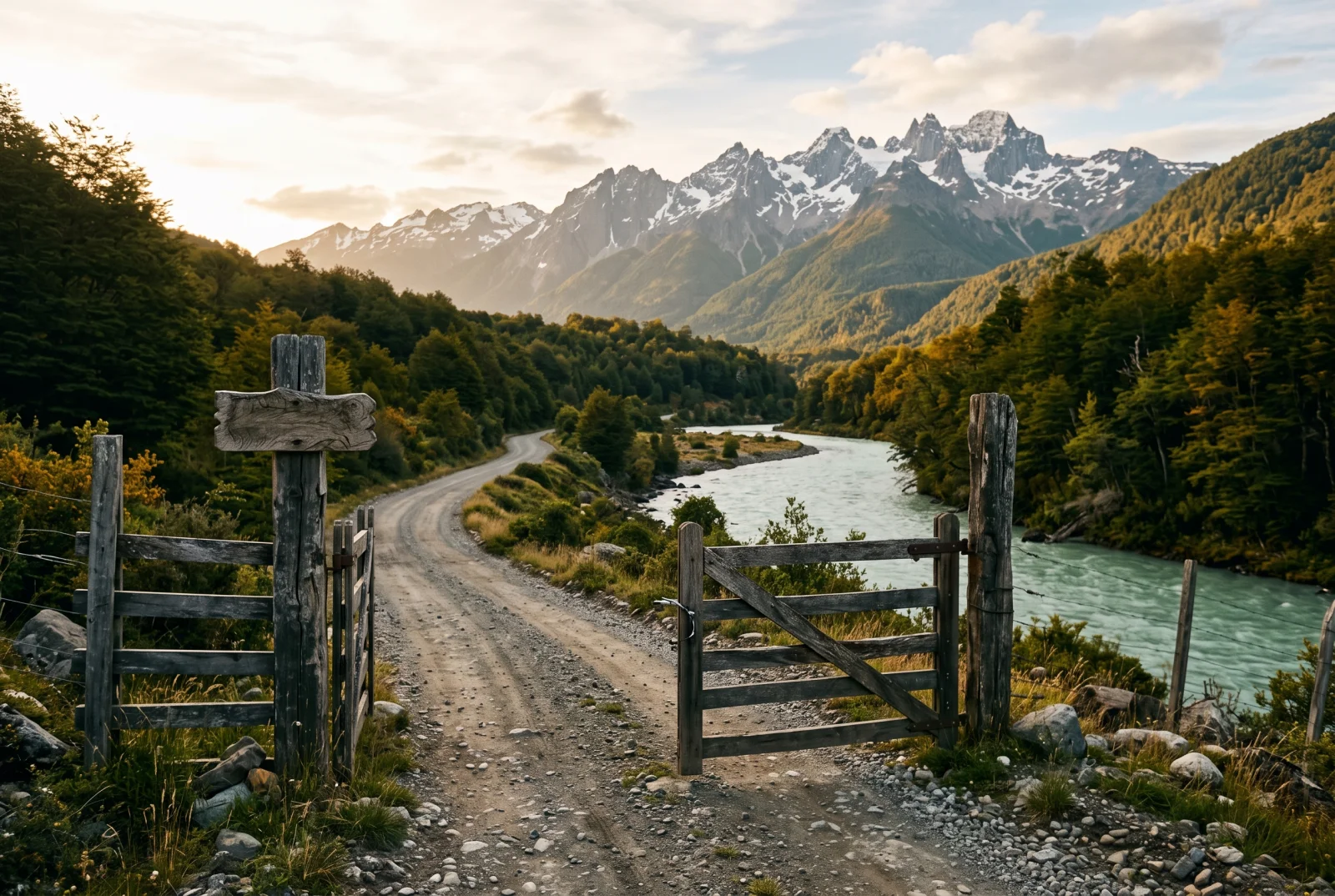 Access roads and river frontage drive campo value. See farms for sale near Coyhaique.
Subdivision rules: DL 3516 and the destino trap
Plenty of buyers look at a 500 hectare campo and see twenty future lakefront lots. Before you build that spreadsheet, meet Decreto Ley 3.516 of 1980, the law governing subdivision of rural land (predios rusticos: land with agricultural, livestock, or forestry aptitude outside urban limits, which describes essentially every campo in rural Aysen).
The rules, in brief:
- You may freely subdivide only into lots of at least 0.5 physical hectares (5,000 m2), with limited exceptions listed in Article 1.
- Every subdivision requires certification by SAG (the agriculture and livestock service) before the lots can be inscribed at the CBR. SAG’s requirements include a title inscription with vigencia no older than 180 days, an SII avaluo certificate with soil classification where the property has one, and, if the property lacks direct public road access, proof of an active servidumbre de transito. (Yes, easements again. In Patagonia it is always easements.)
- Here is the trap: the resulting lots remain rural forever. They carry a prohibition on changing their agricultural destino under Articles 55 and 56 of the urbanism law. Violations trigger a fine of 200 percent of the property’s fiscal value, contravening acts are absolutely null, and notaries and registrars are required to enforce the prohibition.
Numbers That Matter: 0.5 hectares is the minimum rural lot. 200 percent of the fiscal value is the fine for changing a lot’s agricultural destino. After the government’s 2022 crackdown on “parcelas de agrado”, treat that prohibition as actively policed, not theoretical.
None of this means subdivision is a bad idea. It means subdivision is a regulated process with real constraints, and the “buy a campo, carve it into weekend parcels, sell to Santiago” playbook has both legal and tax friction (more on the tax part next). If that is your strategy, start with our full guide to subdividing rural land in Chile under DL 3516.
Taxes when you eventually sell: the 8,000 UF gift
Chile is unusually generous to individual property sellers. Under the income tax law, capital gains on real estate sold by natural persons enjoy an exemption (technically an “ingreso no renta”) up to a cumulative lifetime cap of 8,000 UF, roughly 316 to 324 million CLP at mid-2026 UF values, across all your properties and sales combined. The conditions, straight from the SII’s own taxpayer guide:
- The property was acquired on or after January 1, 2004.
- You sell to a non-related party.
- You held the property for more than 1 year. And here is the farm-specific kicker: more than 4 years when the sale results from subdividing land, urban or rural. The subdivide-and-flip strategy does not just face SAG paperwork, it faces a quadrupled holding period.
Gains above the 8,000 UF lifetime cap are not left to the general regime by default: you may elect a flat 10 percent substitute tax on the received gain, declared on Form 22. And do not imagine the sale flying under the radar: notaries and Conservadores report transactions to the SII, which pre-fills your sale data.
Bought before 2004? Different regime: properties acquired before January 1, 2004 fall under the rules in force at the end of 2014, under which a non-habitual sale to a non-related party is fully non-taxable. This matters when you are the buyer of a long-held estancia, because your seller’s tax position shapes the negotiation.
For worked examples and the fine print, we have a dedicated post on the 8,000 UF capital gains exemption. And for the annual holding cost side (contribuciones, the property tax), see our guide to Chile’s annual property tax: rural rates and exemptions have their own logic and deserve their own read.
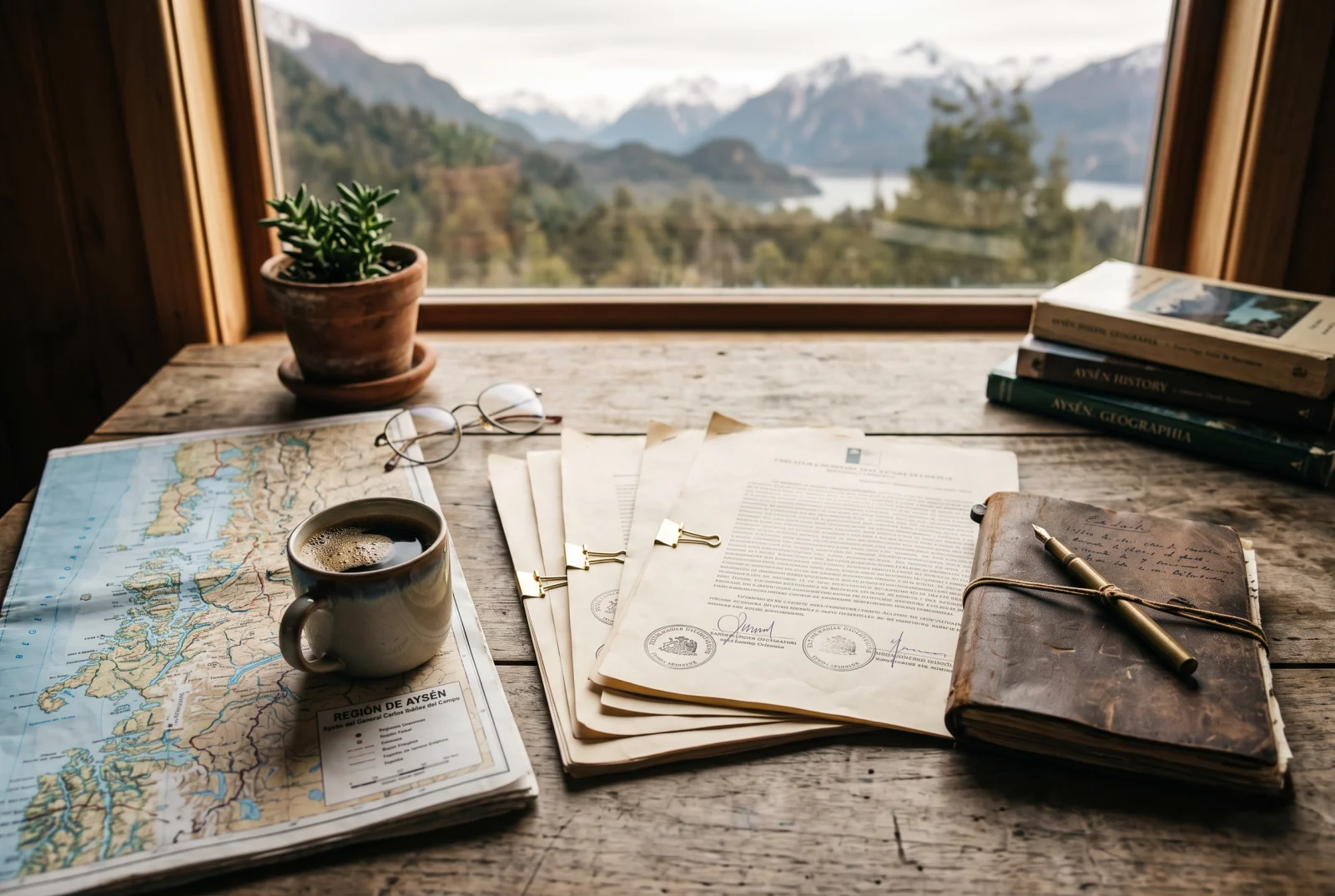 The paperwork is the easy part when it is done in the right order. Questions? Contact our team.
What farms actually cost in 2026
Now the part everyone scrolls to. These are current asking-price benchmarks from live broker listings, not appraised market values: asking prices are where negotiations start, not where they end.
Based on Campos Patagonia listings verified in July 2026, large remote acreage in Aysen runs roughly 1.1 to 1.35 million CLP per hectare, which works out to about UF 28 to 34 per hectare at mid-2026 UF values of roughly CLP 39,500 to 40,500. Concrete examples:
- 3,770 hectares with Lago O’Higgins waterfront near Villa O’Higgins, asking 1,350,000 CLP/ha, with an adjacent 3,732 hectare parcel asking 1,130,000 CLP/ha, about 16 percent cheaper for the neighboring block.
- A 999.87 hectare conservation campo in Valle Pangal, 35 minutes from Puerto Aysen, asking 1,100 million CLP total, about 1.1 million CLP/ha.
Small, well-located parcels are a different universe entirely:
- 10 hectares near Balmaceda airport asking 135 million CLP, or 13.5 million CLP/ha.
- 2.95 hectares with 160 meters of Rio Manihuales river frontage asking 239 million CLP, roughly 81 million CLP per hectare, corroborated by a comparable broker listing at 6,000 UF for 3 hectares of the same river’s frontage.
Local Tip: The per-hectare spread between a remote 3,000 hectare estancia and a small riverfront parcel is roughly 70x. Scale, road access, and water frontage are the three levers that set campo prices in Aysen. Decide which one you are actually paying for before you compare listings.
Budget note: some listings in the region carry a 3 percent buyer-side brokerage fee plus IVA on top of the price, so read the listing terms. To calibrate your own search, browse the current inventory of campos for sale across the Aysen Region and farms around Coyhaique, where road access and services put a floor under prices.
Your step-by-step purchase checklist
Here is the whole campaign in one list, in the order that avoids expensive backtracking:
- Define the mission. Working farm, conservation, fishing lodge site, or long hold? The destino rules and subdivision limits above should shape the shortlist, not surprise you after closing.
- Get your RUT started early through a Chile-resident representative. It costs nothing to run this in parallel with your search.
- Shortlist and visit. Photos lie about access roads. Winter visits tell you things summer visits hide.
- Verify the border-zone status of the specific property with your lawyer (relevant mostly for structuring, since as a non-bordering foreigner you are outside the prohibition).
- Order the full CBR bundle: inscription with vigencia, GP certificate, 10-year title history, plus the non-expropriation certificate.
- Run the water rights search separately. Separate registry, separate task, non-negotiable for a farm.
- Walk the access and hunt for unregistered servidumbres. Get every access right into the contract.
- Sign the escritura publica before a notary, then register at the local CBR. Ownership is perfected at registration, so do not release final funds against anything less.
- Keep every document. Your acquisition paperwork is also your future tax basis when the 8,000 UF exemption math happens.
Frequently Asked Questions
Do water rights come with the farm automatically?
No, and this catches many buyers off guard. Water use rights (derechos de aprovechamiento) are recorded in a separate CBR registry, the Registro de Propiedad de Aguas, and do not automatically appear in the standard title study bundle. You must commission a separate water registry search and make sure the deed explicitly transfers the rights. Our post on water rights in Chilean land sales covers the mechanics.
Can citizens of Argentina, Bolivia, or Peru ever buy property in a declared border zone?
Yes, but only through an exceptional route: the President of Chile can issue a supreme decree founded on national interest, countersigned by three ministries, nominatively authorizing a specific person for a specific property, with applications channeled through regional authorities. It is discretionary and rare, not a standard procedure.
Can I claim the 8,000 UF capital gains exemption if I am not a Chilean tax resident?
Yes. SII administrative jurisprudence (Oficio 105 of 2024) confirms that even non-residents can access the 8,000 UF benefit when the legal conditions are met. Keep complete acquisition records from day one, since the exemption math depends on documenting your cost basis.
How much are the annual property taxes (contribuciones) on a campo?
Rural property tax in Chile follows its own valuation and exemption logic based on the fiscal appraisal of the land, and rates depend on the property’s classification. We did not want to quote numbers here that vary case by case, so read our dedicated guide to Chile’s annual property tax and ask the SII for the property’s current avaluo certificate during due diligence.
Can I get a Chilean mortgage as a non-resident to buy a farm?
Plan around cash. Non-resident financing for rural land is not a developed market in Chile, and most foreign campo purchases are completed with funds wired from abroad. If financing matters to your plan, raise it with Chilean banks early and treat any approval as a bonus rather than an assumption.
Do I need SAG approval just to buy a whole campo?
No. SAG certification under DL 3516 applies when rural land is subdivided, not when an entire existing predio changes hands. Buying a whole campo follows the standard route: due diligence, escritura publica before a notary, and registration at the Conservador de Bienes Raices.
Interested in buying land in Patagonia?
We connect buyers with the best opportunities in Chile's Aysen Region. Tell us what you're looking for and we'll help you find it.
No commitment. Your information is kept confidential.
Written by
Nicolas GorroñoFounder & Editor
Founder of Patagonia Properties. Grew up in Coyhaique, lived in Australia, and is now back in Patagonia full-time. SEO and digital marketing specialist.
LinkedIn